

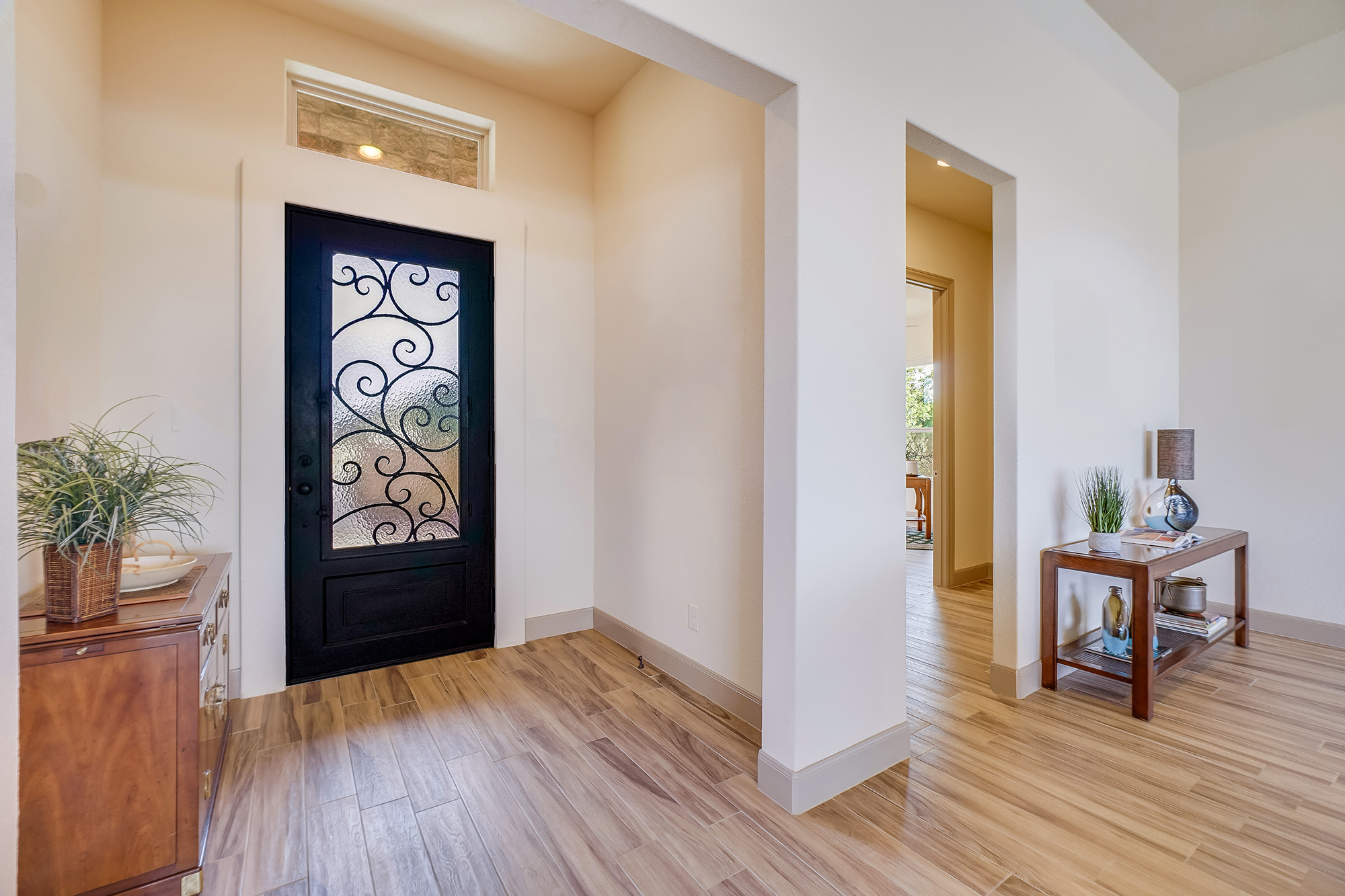
Two neighbours can buy the identical laminate, in the same colour, from the same store, and end up with floors that feel completely different underfoot. One walks solid and quiet. The other has that faint hollow click, the sound people describe as clopping, that seems to follow every footstep. The homeowner with the hollow floor understandably assumes they got a worse batch, or that the installer cut a corner somewhere.
Usually neither is true. The laminate is doing its job. The difference is coming from the layers beneath it, and specifically from how the house underneath the floor was built, and how much attention got paid to the thin layer between the two. Once you understand what is actually making the sound, the whole thing stops being mysterious.
The subfloor is doing most of the talking
Laminate on its own is a quiet material. The noise people notice is not really the laminate, it is what happens in the space between the laminate and the surface it is floating on. Laminate is a floating floor, meaning it is not glued or nailed down, it rests on top of everything below it. So whatever is underneath has an outsized say in how the whole floor sounds and feels.
Older homes tend to have subfloors that have lived a life. Plank or older plywood, settled over decades, sometimes with slight dips or small gaps that have opened up as the house aged and shifted. When a floating laminate floor spans one of those low spots, it is bridging a tiny void rather than resting on solid support, and a plank bridging a gap is exactly what produces that hollow, drum like sound when you step on it. There is air under there, and air is what you are hearing.
Newer construction generally starts from a flatter, more consistent subfloor, installed to tighter modern tolerances, which simply gives the laminate a more even and better supported surface to sit on. Fewer voids, fewer dips, fewer little pockets of air for a footstep to find. That difference in the foundation, far more than anything about the laminate itself, is usually the real reason the same product can sound solid in one house and hollow in another.
Underlayment matters more in an old house than a new one
Between the subfloor and the laminate sits the underlayment, a thin cushioning layer that most people never think about and that quietly does an enormous amount of work. In an older home it matters even more than in a new one, precisely because it has more imperfection to smooth over.
A basic foam underlayment does the bare minimum. It separates the laminate from the subfloor and not much else. It does little to deaden sound and little to bridge the small irregularities of an older subfloor. Step up to a denser acoustic underlayment and it starts doing real work, both dampening the sound of footsteps and helping the floor feel more solid over a subfloor that is not perfectly flat. In an older home that is pulling double duty, and it is often the single biggest lever you have over how the finished floor feels underfoot.
This is also, frustratingly, one of the easiest things to skimp on during installation, because it is invisible once the job is done and shaving it saves a little money up front. Nobody looks at a finished floor and sees the underlayment. But they absolutely hear it, every day, for as long as they own the floor. It is a poor place to save and a very good place to spend.
Why a brand new home is not automatically quiet
It would be tidy if new construction always meant a solid, quiet laminate floor. It does not, and this catches people out. Builder grade installations sometimes use the thinnest, cheapest underlayment that technically meets spec, chosen to hit a cost target across a whole development. The result can be a brand new home with a surprisingly hollow sounding floor sitting on top of a perfectly flat, perfectly modern subfloor.
That is the part worth holding onto if you are putting laminate into a new build, or buying one with laminate already down. A flat subfloor is a good start, but it does not finish the job on its own. Pair a flat subfloor with a thin underlayment and you can still end up with a floor that clops, because the flatness solved one problem and the underlayment quietly created another. The age of the house is not the whole story. The underlayment spec matters just as much in a home built last year as in one built fifty years ago, arguably more, since a modern flat subfloor with poor underlayment has no excuse for sounding hollow and yet manages it anyway.
Getting it right before the floor goes down
The good news in all of this is that a hollow sounding floor is far easier to prevent than to cure. Once laminate is installed, fixing the sound usually means pulling it up, which nobody enjoys. Before installation, it is mostly a matter of asking the right questions and spending sensibly on the layer that matters.
Ask what underlayment comes with the laminate line you are considering, and what its thickness and density actually are, rather than accepting whatever is bundled by default. Ask whether the subfloor has been checked for flatness before anything goes down, since catching a dip early is trivial and catching it late is not. And ask whether a better acoustic underlayment is available and whether it is worth the difference in your particular home, because in an older house, or a new one with a cheap builder default, it very often is. Getting those answers before the first plank is laid is so much simpler than living with a floor that announces every step.
Southern Flooring and Design helps homeowners across Tallahassee, FL get the underlayment and installation approach right for their specific house, whether it went up decades ago or last year. Browse the full range of laminate flooring options and underlayment choices, and lean on us for the part that does not show up in the showroom. Visit Tallahassee, FL to talk through your subfloor, or contact us before your installation so we can help you get it right the first time.


